
13 October 2026
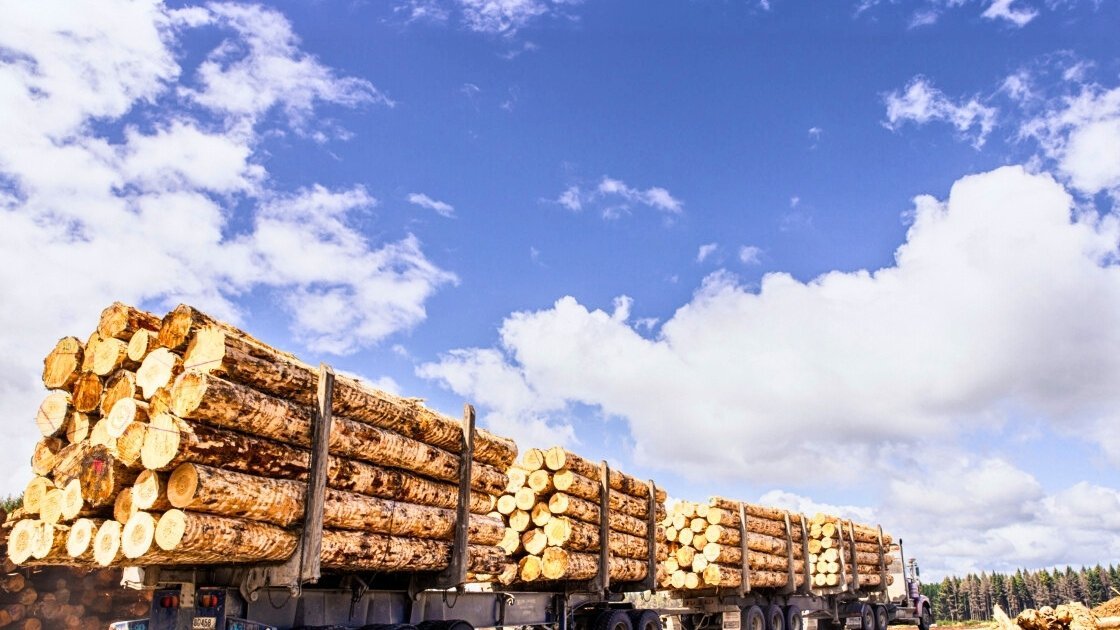
Inside Kaingaroa, the heavy lifting happens off the public highway. A privately managed off-highway road network runs around the clock, moving logs efficiently from harvest sites to processing or rail.
“The forest’s scale lets us plan and coordinate properly,” says Jake Rogers, RFH’s Off-Highway Truck Manager. “That’s what makes the operation efficient.”
The trucks inside the Kaingaroa Forest Estate are unlike any others in New Zealand. Purpose-built stem trucks for full length tree cartage, as well as double and triple units stretching more than 50 metres in length, carrying up to 150 tonnes of logs – and up to 200 tonnes all-up. These vehicles operate on a continuous cycle. Their routes service the Kaingaroa Processing Plant, off-highway domestic customers and the Murupara railhead, which links export volume through to the Port of Tauranga by rail.
“Our biggest units can carry around 150 tonnes of logs. You can’t run that anywhere else but inside a forest like this,” Jake explains. “We’re a 24-hour operation most days. That’s what keeps the mill fed and the trains moving.”
Because the network is designed specifically for forestry, scale translates directly into efficiency.
“Because we’ve got the space and the roading, we can move more wood with fewer trips,” Jake says. “That means less fuel, less wear, and less risk.”
Within Kaingaroa, road and rail function as one integrated system. Each train departing Murupara or Kawerau removes dozens of heavy trucks from public highways. Each off-highway haul reduces emissions, improves safety, and limits impacts on surrounding communities – while maintaining the throughput required to support New Zealand’s wood processing sector.
“The off-highway network means we don’t need to run heavy units on public roads,” Jake says. “It’s better for the environment, safer for everyone and better for the communities around us.”
Source & image credit: Kaingaroa Tipu

More Posts
13 Oct 2026
Operating at scale: The off-highway advantage
Inside Kaingaroa, the heavy lifting happens off the public highway. A privately managed off-highway road network runs around the clock, moving logs efficiently from harvest sites to processing or rail. “The forest’s scale lets us plan and coordinate properly,” says ...
Read more

12 Oct 2026
The timber industry’s decarbonisation pathway
Australia’s energy transition is reshaping the economy. The latest Intergenerational Report 2026 and FWPA’s Building a Low-Carbon Future for Australia point in a similar direction, consistent with a transition beyond net zero. The Intergenerational Report’s projections point to a renewables-dominated ...
Read more
12 Oct 2026
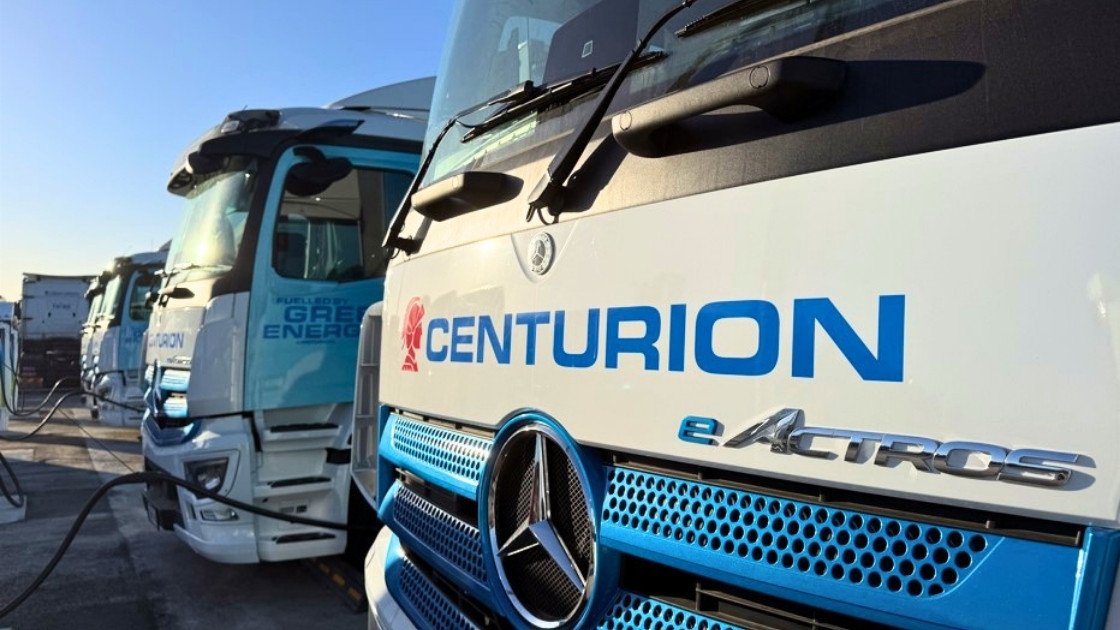
Plans for WA’s first electric freight network
Perth-based logistics giant Centurion is backing plans to build the first electric heavy freight charging network in Western Australia, which would comprise an initial three 12-bay charging networks between Perth and Bunbury to the south. The freight network is the ...
Read more

11 Aug 2026
Recent spike in log truck & trailer rollovers
Recent industry discussions and safety incident data have highlighted a concerning increase in log truck and trailer rollover events across New Zealand. Industry leaders, Forest Owners, Transport Operators, and the Log Transport Safety Council (LTSC) have acknowledged that this trend requires ...
Read more

11 Aug 2026
Driver fatigue: What half a billion kms has taught us
The launch of Transporting New Zealand’s Fatigue Management: Road Freight Update at their recent 60th Anniversary Conference provides an opportunity to reflect on how our understanding of driver fatigue is evolving. AutoSense was proud to support the report because it brings together ...
Read more

11 Aug 2026
Excavator fleet at iron ore mine now fully electric
The first of Andrew Forrest’s giant iron ore mines in the Pilbara is now operating with an entirely electric fleet of huge excavators, as testing continues nearby on the first of its in-house 6 MW fast chargers, likely the biggest ...
Read more

07 Jul 2026
HarvestTECH & Wood Transport Logistics 2026 programme released
The programme has now been released for HarvestTECH & Wood Transport Logistics 2026, bringing together two days of presentations focused on the latest developments in forest harvesting, wood transport and supply chain logistics. Running in Rotorua, New Zealand on 10–11 ...
Read more

07 Jul 2026
Linfox rolls out 26 heavy-duty electric trucks
Australia’s biggest private logistics company is rolling out a fleet of 26 heavy-duty Volvo electric trucks across Melbourne, Brisbane and Adelaide on some of the country’s busiest urban freight routes. Linfox said it is putting the first of its battery-powered ...
Read more

07 Jul 2026
We’re targeting 35% electrification in 10 years – but 35% of what?
When Australia’s Chris Bowen and Turkey’s Murat Kurum unveiled their “35 by 35” flagship target at Bonn this month – raising electricity’s share of global Final Energy from around 20 per cent today to 35 per cent by 2035 – it was ...
Read more

07 Jul 2026
Government backs major North Island freight hub
The Government has approved up to $22.4 million in funding to support the rail component of Te Utanganui – a major new freight hub in Palmerston North, Rail Minister Winston Peters and Regional Development Minister Shane Jones say. Te Utanganui ...
Read more
07 Jul 2026
Transport cost index – Unprecedented impact of fuel pricing
We recently released our Grant Thornton Transport Cost Index for the March quarter and that includes forecasting for the following quarter. The magnitude of the rise forecast is unprecedented in the Index’s history and demonstrates the downstream impact of the geopolitical ...
Read more

02 Jun 2026
Call for Speakers: HarvestTECH & Wood Transport Logistics 2026
Do you have a new technology, operational case study, or innovation that could help shape the future of harvesting and wood transport across Australasia? Join industry leaders at HarvestTECH & Wood Transport Logistics 2026 and present to senior forestry, harvesting, ...
Read more

02 Jun 2026
Australia at “tipping point” for switch to electric trucks as half its diesel fleet nears replacement
Australia is at a tipping point for electrifying transport as more than half of the country’s trucking fleet is due for replacement, and needs to act to avoid a repeat of the current fossil fuel crisis, a leading transport and ...
Read more

02 Jun 2026
EV shift needs systems: Toll
Mandatory climate reporting requirements are changing how the heavy vehicle industry approaches decarbonisation with pressure building across entire supply chains to measure and reduce emissions. Speaking at TruckShowX in the Hunter Valley last month, Nanae Kii of Toll Group said the company’s ...
Read more

02 Jun 2026
Diesel powertrains vs battery electric powertrains explained
Diesel powertrains and battery electric powertrains each offer distinct advantages depending on the application. Diesel excels in long-distance travel, durability and versatility across industries like trucking, agriculture and mining, while electric powertrains are best suited for urban stop-and-go driving and ...
Read more

02 Jun 2026
King’s Birthday Honours 2026: Warwick Wilshier’s work on transforming log truck safety on NZ roads
Wilshier had been a log truck operator for more than four decades. The 65-year-old has been made a Member of the New Zealand Order of Merit in the 2026 King’s Birthday Honours for his service to the industry and his ...
Read more

05 May 2026
Electric vehicle truck conversions surge as fuel crisis pushes freight industry to reinvent itself
Electric trucks could soon become a common sight on Australian roads as industry players race to cut reliance on diesel and strengthen the nation’s fuel security. An Australian company is now converting traditional diesel trucks into fully electric vehicles — ...
Read more

05 May 2026
Tesla Semi Truck has officially started mass production
For almost a decade, Tesla has been working to launch one of its most impactful products to reduce transport emissions: the Tesla Semi electric truck. Now, the first Tesla Semi has officially been produced off a high-volume production line in ...
Read more

05 May 2026
Shredded wood for roading: Innovative use of harvesting residues
FGR assisted Hamish Scown of Pan Pac Forest Products Ltd with recent trials of using shredded wood from forestry debris as temporary roading aggregate. Three test roads were built using shredded wood in layers half a metre deep (500mm) to ...
Read more

07 Apr 2026
Forestry company parks electric truck despite spike in diesel prices
An electric truck trial in South Australia’s south-east has shown the vehicles are fit for some use in the forestry industry, but are not financially viable — even with diesel prices soaring. Fennell Forestry launched a trial using a truck converted ...
Read more

07 Apr 2026
FICA fuel adjustment factor calculation
As you are well aware as a result of the conflict in the Middle East fuel prices have risen rapidly over the past two weeks. FICA has been talking with FOA and MPI regarding the situation and has been asked ...
Read more