

12 October 2026
Australia’s energy transition is reshaping the economy. The latest Intergenerational Report 2026 and FWPA’s Building a Low-Carbon Future for Australia point in a similar direction, consistent with a transition beyond net zero. The Intergenerational Report’s projections point to a renewables-dominated electricity grid, and a declining fuel-excise base up to 2050.
A grid dominated by renewables
Figure 1, based on the latest Intergenerational Report 2026, shows the energy mix from 2026 to 2050 under a scenario involving significant investment in the energy transition. Coal generation, which supplied around 170 TWh in 2009–10, declines steadily and falls below 5 TWh after 2035. Generation from wind, large-scale solar and rooftop solar expands significantly, increasing total electricity generation from roughly 200 TWh to more than 450 TWh by 2049–50 as electrification spreads across the economy.
This is not a business-as-usual (BAU) scenario. It depends on sustained and significant investment in generation, transmission and energy storage. As this investment occurs, the electricity used to power sawmills and other forest and wood product operations become progressively cleaner, even without changes to the industry’s own equipment.
Figure 1: Australian Energy Mix Transition in the Intergenerational Report 2026

Source: Intergenerational Report 2026
The fiscal signal from fuel excise
The same transition has a budget consequence. Figure 2, also from Intergenerational Report projections, shows gross fuel excise falling from around 0.9 per cent of GDP in 2025-26 to under 0.2 per cent by 2065-66. Net fuel excise falls further, less than 0.1 per cent of GDP.
This scenario assumes broad adoption of electric transport, improving energy efficiency while reducing the use of taxable fossil fuels. As fuel consumption declines, so too does the fuel-excise revenue base that has traditionally supported roads and other public services.
For industries that transport heavy loads, such as forestry and wood products, the implications are significant.
Source & chart credit: Forest & Wood Products Australia (FWPA)
More Posts
13 Oct 2026
HarvestTECH programme looks at the realities of forestry operations
From high-production logging and automated harvesting to paperless operations and AI-assisted transport planning, the HarvestTECH & Wood Transport Logistics 2026 programme covers a mix of new technology and practical experience from the field. The programme for the 10–11 November event ...
Read more

13 Oct 2026
Joystick Trades: how gaming skills are transferring to New Zealand’s high-tech workforce
Years spent gaming may be giving some young New Zealanders an unexpected head start in the modern trades, as automation, robotics and digital technology transform traditional workplaces. Industry training organisation Competenz has coined the term Joystick Trades after hearing the ...
Read more
12 Oct 2026
The timber industry’s decarbonisation pathway
Australia’s energy transition is reshaping the economy. The latest Intergenerational Report 2026 and FWPA’s Building a Low-Carbon Future for Australia point in a similar direction, consistent with a transition beyond net zero. The Intergenerational Report’s projections point to a renewables-dominated ...
Read more
12 Oct 2026
Plans for WA’s first electric freight network
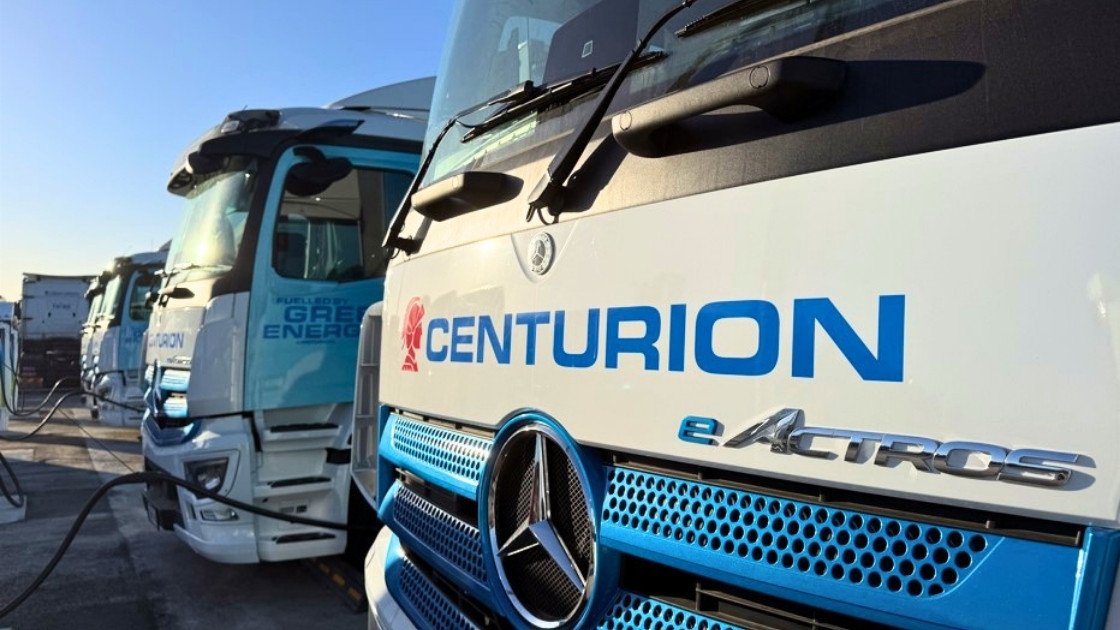
Perth-based logistics giant Centurion is backing plans to build the first electric heavy freight charging network in Western Australia, which would comprise an initial three 12-bay charging networks between Perth and Bunbury to the south. The freight network is the ...
Read more

12 Oct 2026
Untapped wood from forestry to help fuel NZ industry
The country’s supply of sustainable wood fuel is ramping up with work underway to capture previously unused forestry material and investigate new wood energy manufacturing plants. “When businesses are looking at energy options, woody biomass could provide an economic alternative ...
Read more

07 Sep 2026
From AI to heavy machinery: What’s on at HarvestTECH & Wood Transport Logistics 2026
Forestry operations are under pressure from all directions – rising costs, tighter margins, changing workforce requirements and growing demands for greater efficiency and safety. That makes the practical side of technology increasingly important. What is actually working in the forest? ...
Read more

07 Sep 2026
Caterpillar is bringing to AI deployment what it learned from automating mining
Nearly every company that’s trying to deploy artificial intelligence runs into the same problem: it’s hard to integrate the tech into everyday operations. Industrial heavyweight Caterpillar has spent decades dealing with a version of that problem in the physical world, ...
Read more

07 Sep 2026
Free program to help SMEs advance AI and digital tech ideas in Queensland
The free eight-week online program, delivered by Australia’s national science agency, CSIRO, helps businesses turn early-stage ideas into actionable R&D plans while building connections with expert facilitators and researchers. Offered through the Queensland Government-funded Regional University Industry Collaboration (RUIC) program, ...
Read more

07 Sep 2026
Tairawhiti – Productivity is bigger than the crew
Tony Hill of Hill Logging picked me up at 6:00am for a visit to his steep country winch-assist (SWY) operation east of Mangatu Forest. Many readers will know Tony through his role as NZ Logger Magazine’s “Iron Tester”. Tony comes ...
Read more

07 Sep 2026
Next generation of Komatsu forestry machines
Komatsu Forest presents a new generation of forestry machines, where both harvesters and forwarders have been comprehensively updated to meet the evolving demands of modern forestry. The new range combines improved productivity with reduced environmental impact, focusing on efficiency, operator ...
Read more

07 Sep 2026
Enforcement data reveals where forestry needs to lift its game
Strengthening organisational capability, planning, supervision and risk management remains one of the forestry sector’s biggest challenges, according to new enforcement data released by WorkSafe New Zealand. During the 2025/26 business year, WorkSafe conducted 526 assessments across the forestry industry. One ...
Read more

07 Sep 2026
Learning Through the Storm: Report released
The Top of the South Wood Council, with support from Te Uru Rākau – New Zealand Forest Service, has recently released Learning Through the Storm, a report on the widespread windthrow caused by the severe storm events of 2025. On July ...
Read more

11 Aug 2026
Testing New Zealand’s first heavy electric loader
A Volvo L120 Electric wheel loader is helping PermaPine test what sustainable equipment can really deliver in one of New Zealand’s most demanding timber processing environments. Set on a 100-acre site outside Taupō, PermaPine is New Zealand’s largest manufacturer of ...
Read more

11 Aug 2026
New Canopy Class certification raises the bar for contractors
When Skipps Logging became one of the first contractors to achieve Safetree’s new Canopy Class certification recently, they celebrated the win with a special presentation in Cambridge. The certification, which Skipps helped pilot, is designed to recognise contractors who demonstrate ...
Read more

11 Aug 2026
Forestry confirms new training partnership with Competenz
New Zealand’s forestry sector has confirmed it will align its workplace vocational training with the new Engineering and Manufacturing Private Training Establishment (PTE), operating under Competenz. The decision follows extensive consultation with employers, contractors and training providers, led by the ...
Read more

11 Aug 2026
Recent spike in log truck & trailer rollovers
Recent industry discussions and safety incident data have highlighted a concerning increase in log truck and trailer rollover events across New Zealand. Industry leaders, Forest Owners, Transport Operators, and the Log Transport Safety Council (LTSC) have acknowledged that this trend requires ...
Read more

11 Aug 2026
Driver fatigue: What half a billion kms has taught us
The launch of Transporting New Zealand’s Fatigue Management: Road Freight Update at their recent 60th Anniversary Conference provides an opportunity to reflect on how our understanding of driver fatigue is evolving. AutoSense was proud to support the report because it brings together ...
Read more

11 Aug 2026
Excavator fleet at iron ore mine now fully electric
The first of Andrew Forrest’s giant iron ore mines in the Pilbara is now operating with an entirely electric fleet of huge excavators, as testing continues nearby on the first of its in-house 6 MW fast chargers, likely the biggest ...
Read more

07 Jul 2026
HarvestTECH & Wood Transport Logistics 2026 programme released
The programme has now been released for HarvestTECH & Wood Transport Logistics 2026, bringing together two days of presentations focused on the latest developments in forest harvesting, wood transport and supply chain logistics. Running in Rotorua, New Zealand on 10–11 ...
Read more

07 Jul 2026
Linfox rolls out 26 heavy-duty electric trucks
Australia’s biggest private logistics company is rolling out a fleet of 26 heavy-duty Volvo electric trucks across Melbourne, Brisbane and Adelaide on some of the country’s busiest urban freight routes. Linfox said it is putting the first of its battery-powered ...
Read more

07 Jul 2026
Kesla introduces new F-Series forwarder crane range
Kesla has expanded its forestry equipment portfolio with the launch of a new F-Series range of forwarder cranes, designed for the most common forwarder size classes. The new family includes the 9F/FT, 10F/FT, 12F/FT and 14F/FT models and replaces a ...
Read more