

12 October 2026
The country’s supply of sustainable wood fuel is ramping up with work underway to capture previously unused forestry material and investigate new wood energy manufacturing plants.
“When businesses are looking at energy options, woody biomass could provide an economic alternative to help keep manufacturer’s processes running and jobs in regions across New Zealand,” said Richard Briggs, EECA Group Manager, Delivery & Partnerships
“We know from regional analysis by EECA (Energy Efficiency and Conservation Authority) that there’s a significant, untapped supply of wood fibre from the forest that could be fuelling our industries.”
Woody biomass provides lower lifecycle greenhouse gas emissions than fossil fuels when sustainably sourced and managed.
Capturing forestry potential
“New Zealand has 8 million tonnes of wood out of commercial forests per year that could sustainably be used as fuel,” said Briggs. “While the opportunity is there, the upfront costs of establishing collection points has been a barrier. This is the next step in helping open up opportunities for New Zealand to make better use of our resources and power industry.”
EECA is investing in five new wood energy aggregation facilities to secure low-grade wood from commercial forestry alongside the private sector.
Spread between Southland and Waikato. The sites will provide a central repository for nearby forestry operations to collect, store, and prepare wood that would otherwise go unused or left in the forest.
“We know there’s plenty of wood available, it’s just not being collected or stored in a considered way,” said Briggs. “By capturing this material there’s an opportunity for nearby businesses, and even mature biomass operations, to ramp up their use of it as a fuel. Plus, it’s a win for the forestry industry and adds a potential additional revenue source.”
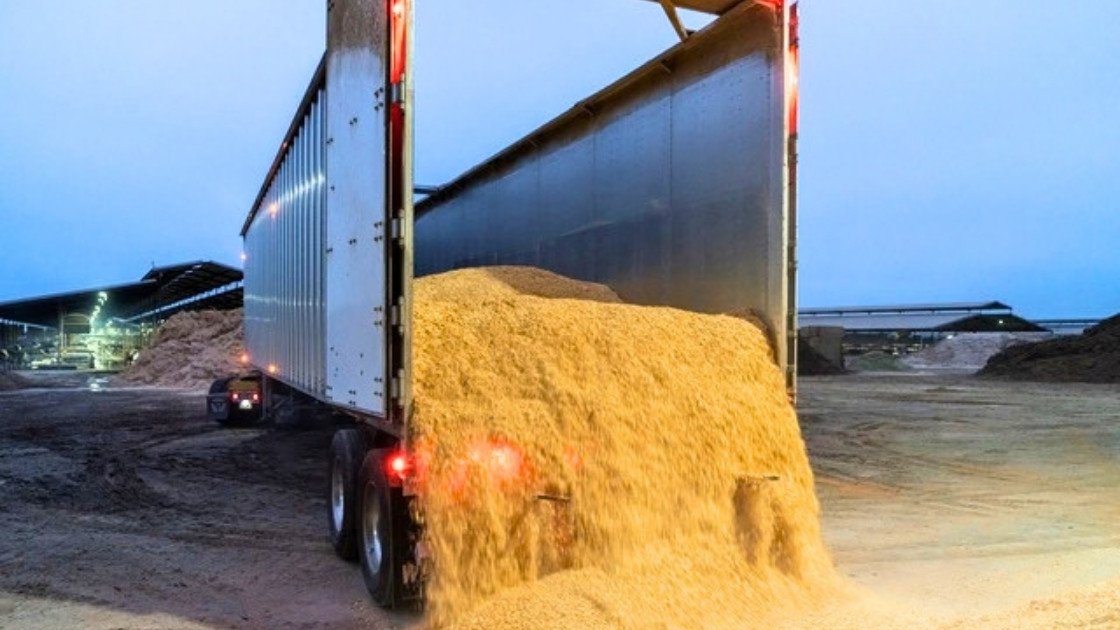
Once operational, the sites will have a combined capacity to process 200,000 tonnes per year of wood chip fuel – enough to supply around 2 petajoules (PJ) of energy annually or meet the annual fuel demand of around 10–20 industrial businesses like dairy and meat processors, food manufacturers, or laundries.
In total EECA is contributing $3.7M in funding, helping to unlock an estimated $11.6 million in private investment across the five projects.
Turning wood into fuel – businesses look to new manufacturing facilities
Following a request for proposal, an additional four projects looking to establish wood energy manufacturing facilities have received repayable grants to develop their investment case for getting up and running.
“Developing robust investment cases has been a critical barrier to building New Zealand’s wood energy supply. By supporting businesses to make this detailed step, we’re helping unlock low carbon, future fuels and build out a much-needed supply chain,” said Briggs.
Wood energy manufacturing plants being explored around the country could significantly expand New Zealand’s energy supply, giving businesses using coal and gas greater choice in how they power their operations.
Source: EECA

More Posts from Issue

12 Oct 2026
Milestone for Jubilee Sawmill’s $88m bioenergy project
Construction of OneFortyOne’s $88 million Co-Generation Boiler project facility has reached another significant milestone, with the project’s boiler now in place at the Jubilee Sawmill. With crews on site before sunrise on 16 September, months of planning culminated in the ...
Read more
12 Oct 2026
KEITH showcases faster unloading with new RX2 drive
At last month’s Residues2Revenues 2026 conference in Brisbane, material handling specialist KEITH Manufacturing Co. showcased its updated two-cylinder RX2 WALKING FLOOR® drive unit, designed to improve unloading and turnaround times for the wood-products sector. With truck turnaround times directly affecting ...
Read more

12 Oct 2026
Lignin resin delivers flame retardancy without formaldehyde
Researchers have developed a bio-based, formaldehyde-free phenolic resin derived from lignin that provides fire protection, strong adhesion, and zero toxic off-gassing for timber products. Published in the journal Green Chemistry, the study details how the new material, dubbed SALG-PR, functions ...
Read more

12 Oct 2026
Future-focused learning
In 2026, the WIDE Trust supported four young professionals to attend the WoodTECH 2026 Conference in Rotorua, giving them the opportunity to engage with one of New Zealand’s leading events for wood processing and manufacturing innovation. WoodTECH brings together engineers, ...
Read more

12 Oct 2026
Comact launches Comact Cutting Solution
Comact, a global leader in high-performance OEM wood processing technologies, announced this week the launch of Comact Cutting Solutions, bringing together Smith Sawmill Service, Oleson Saw Technology, Checkmate Precision Cutting Tools, and the proprietary BLADE brand under a common organizational ...
Read more