
12 October 2026
Pruning and planting are among the most physically demanding tasks in forestry. Workers spend long hours undertaking repetitive movements, working with their arms elevated, handling loads, and navigating challenging terrain. While these activities are fundamental to establishing and maintaining productive forests, they can place significant strain on the body and contribute to fatigue and musculoskeletal injury risk.
As the forestry sector seeks to improve worker wellbeing, retain experienced workers, and attract future generations into the industry, there is growing interest in technologies that can help reduce the physical demands of silviculture work. One emerging option is wearable support technology, commonly known as an exoskeleton. These devices are worn on the body and are designed to reduce the load placed on muscles and joints during physically demanding tasks.
To understand whether these technologies may have a role in New Zealand forestry, the Precision Silviculture Programme recently reviewed international research on exoskeletons and evaluated their potential application within silviculture operations.
Understanding the Challenge
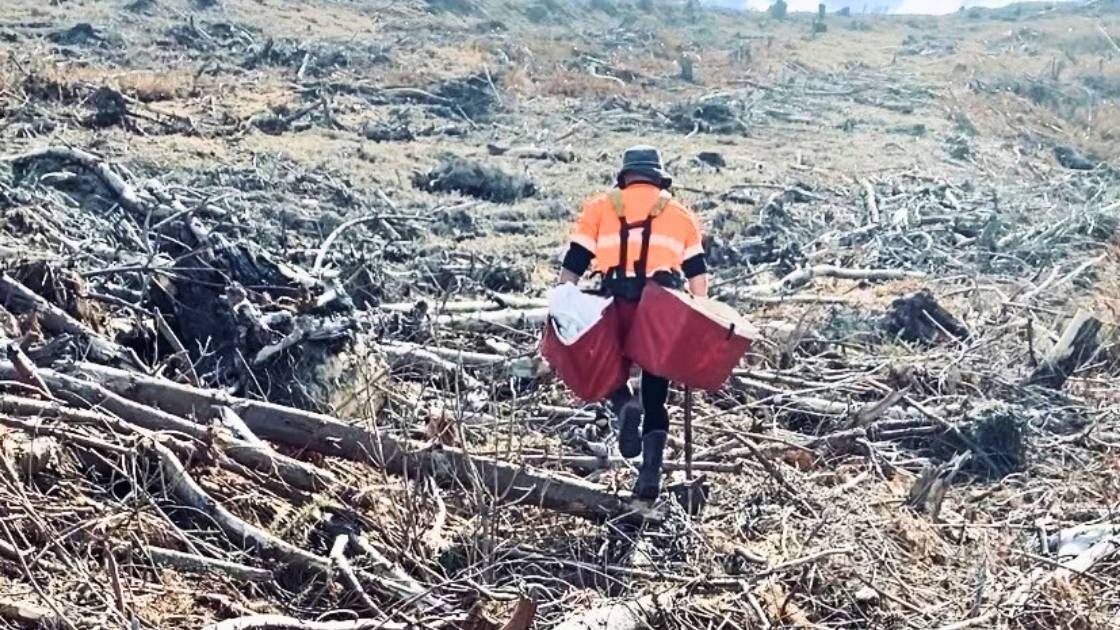
The review focused initially on pruning, a task long recognised for its physical demands. Pruning often requires sustained overhead work, repetitive cutting actions, awkward postures, ladder use, and movement across uneven terrain.
To better understand the ergonomic challenges associated with pruning, the programme undertook a biomechanical assessment of common pruning activities. The assessment found that many tasks fell within high and very high ergonomic risk categories, with forceful lopper use identified as the greatest source of physical exposure. Activities involving prolonged arm elevation, trunk loading, and repetitive cutting motions were particularly demanding.
Could Exoskeletons Help?
The literature review found growing evidence that some exoskeleton designs can reduce physical loading during demanding manual tasks. Passive shoulder-support exoskeletons have shown particular promise in occupations involving prolonged overhead work by reducing demands on the shoulder muscles and delaying the onset of fatigue. Similarly, back-support exoskeletons have demonstrated potential to reduce lumbar loading during repetitive lifting and bending activities.
For forestry, wearable support technologies may help:
- Reduce physical fatigue and strain during demanding tasks
- Improve comfort during prolonged work periods
- Support worker wellbeing and career longevity
- Make physically demanding silviculture roles more accessible to a broader workforce
- Contribute to a more sustainable and resilient workforce over the long term
Importantly, the review also highlighted that technology alone is not the solution. Forestry differs significantly from many of the industries where exoskeletons have been tested. Workers must frequently navigate steep slopes, step over obstacles, climb ladders, carry equipment, and adapt to constantly changing environmental conditions. The findings suggest that success will depend not only on the design of the technology itself, but on achieving the right fit between the worker, the task, and the environment in which the work is performed.
Working Alongside Forestry Crews
A key focus of the programme is ensuring that technology development remains grounded in operational reality. Researchers are working alongside forestry crews and industry partners to better understand the practical challenges of silviculture work and identify where wearable support technologies may provide genuine value.
“If we want a sustainable silviculture workforce, we need solutions that work for the people doing the job. That’s why we’re working alongside forestry crews every step of the way,” said Brionny Hooper, Scientist.
Looking Ahead
Building on the findings from pruning, the team is now investigating whether similar benefits could be achieved in planting operations. The next phase of research will develop a planting-specific biomechanical risk profile, examining the physical demands associated with repetitive bending, trunk flexion, load carriage, and mobility on steep terrain. Potential technologies will then be assessed through operational field trials alongside forestry crews.
Exoskeletons are not a silver bullet, but they offer a promising opportunity to address one of forestry’s enduring challenges: the physical demands placed on its workforce.
Source & image credit: Forest Growers Research

More Posts from Issue

12 Oct 2026
Global sustainability progress report
The International Council of Forest and Paper Associations (ICFPA) released its biennial Sustainability Progress Report which demonstrates progress in seven key areas of sustainability. The 2026 report also highlights the role the forest products sector can play in helping meet ...
Read more

12 Oct 2026
Study shows forest soils help offset methane emissions
Run over two years, the research looked at the methane uptake of soils in three planted forests – Orton Bradley Park and McLeans Island in Canterbury and Kaingaroa (New Zealand’s largest commercial pine plantation, in the Bay of Plenty) – ...
Read more

12 Oct 2026
Faster wood formation matters more than longer growing seasons in a warming climate
In non-tropical forests, cold winters hinder tree growth. There, climate warming prolongs the period during which trees absorb carbon through photosynthesis and store it in wood, known as the growing season. This could potentially mitigate further climate change as wood ...
Read more