

7 April 2026
The forestry sector has long relied on Thunderbird TY50 and TY70 tower yarders—machines designed to be light, transportable, and efficient. However, a serious harm injury of a worker, has highlighted a critical safety concern that demands immediate attention.
The yarder was being prepared to shift. Running lines and guys had been retrieved. The tower was pushed into vertical position and the stabilising ram locked. The guy ropes were hooked on the chassis and ratcheted up to remove excessive slack.
However, during the rope retrieval the tail rope over-spooled or “birdnested”. A plan was then made to untangle the rope and run the tail rope out so it could be correctly fleeted back onto the drum. A grapple operator was positioned in front of the hauler to pull the rope out and then manage rope tension as it was wound back on. Another worker was deployed to sit beside the drum and assist fleeting the bottom layer and a 3rd worker, the
hauler driver, had the tail drum engaged, and idling dead slow in 1st gear. The yarder driver was observing the drum and stabilising ram through the cab side window. The rope was being wound slowly onto the drum, and the first layer was half completed when without warning the spear on the stabilising ram snapped.
The broken spear shot forward and landed on the workers hand who had been positioned near the drum. The injury was severe requiring four fingers to be amputated
Investigation findings
- The investigation revealed that the incident was the result of a stabilising ram failure.
- It identified that the Thunderbird manual prescribes the slackening of all guylines before rope recovery, therefore the tower was not supported by guylines when the stabilising ram failed.
- Also, the stabilising ram spear had been replaced with induction-hardened steel rather than the original mild steel design. Induction hardened steel provides excellent wear resistance and strength but does not have the same ductile microstructure of mild steel, which allows it to deform (bend or stetch) significantly under stress before fracturing, it absorbs energy well.
Recommendations for TY50 and TY70 tower yarders
- Guyline safety: While Thunderbird manuals allow slackening all guylines and locking the pole before rope recovery, it is recommended to keep at least one rear guyline in place to prevent tower collapse if the stabiliser ram fails.
- Stabilising ram spear: Owners must verify the steel grade of stabiliser ram spears. It is recommended that a replacement spear should be consistent th the original mild steel composition with good energy absorbing ductile properties.
- Lagged drums: Rope fleeting exposes workers for 15–20 minutes. Lagging drums reduces this risk. Owners should consider replacing at least the front drum when machines undergo major servicing.
- Annual inspections: Towers must be inspected annually by CBIP-certified inspectors. Inspectors should be briefed on the Kohurau incident and the importance of spear verification and ram integrity.
Source & image credit: New Zealand Forest Industry Safety Council
More Posts

10 Nov 2026
RoadEng 12 brings smarter AI to NZ forest road design
Softree Technical Systems released RoadEng Version 12, with new tools for forest road design. Path Explorer AI, which searches the terrain for the best location for a new forest road, can now work around the roads, landings and crossings engineers ...
Read more

10 Nov 2026
FPInnovations pilots autonomous log hauling in Alberta
FPInnovations has completed a pilot project in Hinton, Alberta, testing how autonomous trucks could be integrated into forest operations. The trial was conducted with forestry company West Fraser and autonomous vehicle technology provider Kodiak AI. Over two weeks of testing, ...
Read more

10 Nov 2026
Improved safety at SCA’s terminals with AI
Sweden-based SCA, Europe’s largest private forest owner, is introducing AI-based camera systems to improve safety at its wood terminals, sawmills and industrial sites following a group-wide pilot project at Torsboda and Töva. The initiative focuses on common vehicle-related risks, including ...
Read more

10 Nov 2026
Fortescue adapts robots for 6mw electric truck chargers
Decarbonising heavy transport is a massive hurdle across resource-intensive sectors, and mining giant Fortescue is pushing the boundaries of what is possible. Facing a complete lack of commercially available tech for off-grid ultra-fast charging, the company has adapted automotive welding ...
Read more
13 Oct 2026
HarvestTECH programme looks at the realities of forestry operations
From high-production logging and automated harvesting to paperless operations and AI-assisted transport planning, the HarvestTECH & Wood Transport Logistics 2026 programme covers a mix of new technology and practical experience from the field. The programme for the 10–11 November event ...
Read more

13 Oct 2026
Joystick Trades: how gaming skills are transferring to New Zealand’s high-tech workforce
Years spent gaming may be giving some young New Zealanders an unexpected head start in the modern trades, as automation, robotics and digital technology transform traditional workplaces. Industry training organisation Competenz has coined the term Joystick Trades after hearing the ...
Read more

12 Oct 2026
The timber industry’s decarbonisation pathway
Australia’s energy transition is reshaping the economy. The latest Intergenerational Report 2026 and FWPA’s Building a Low-Carbon Future for Australia point in a similar direction, consistent with a transition beyond net zero. The Intergenerational Report’s projections point to a renewables-dominated ...
Read more
12 Oct 2026
Plans for WA’s first electric freight network
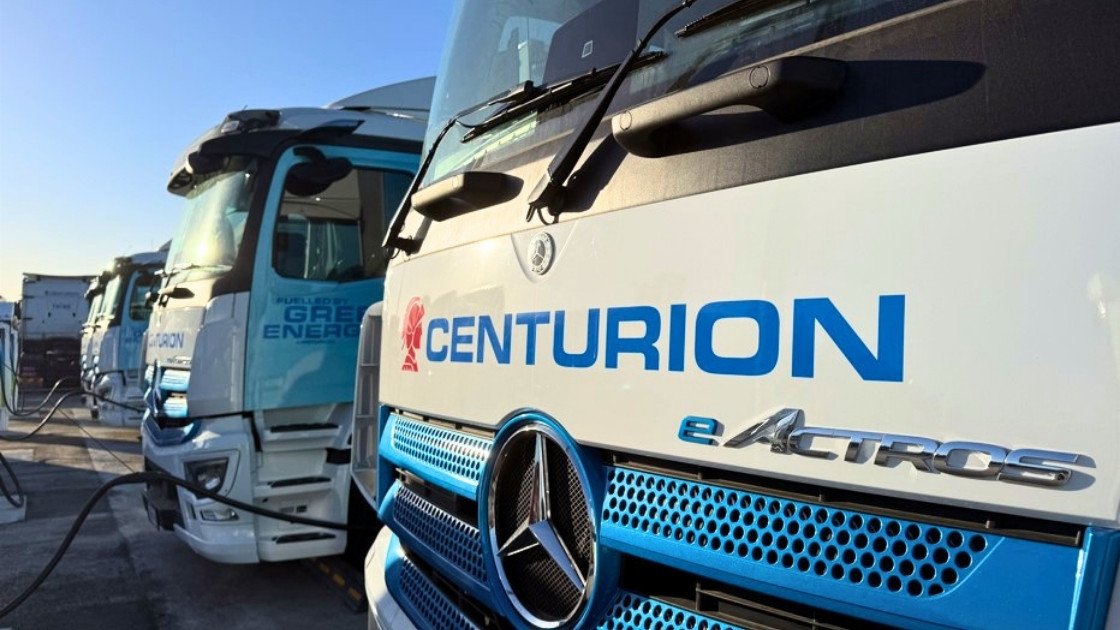
Perth-based logistics giant Centurion is backing plans to build the first electric heavy freight charging network in Western Australia, which would comprise an initial three 12-bay charging networks between Perth and Bunbury to the south. The freight network is the ...
Read more

12 Oct 2026
Untapped wood from forestry to help fuel NZ industry
The country’s supply of sustainable wood fuel is ramping up with work underway to capture previously unused forestry material and investigate new wood energy manufacturing plants. “When businesses are looking at energy options, woody biomass could provide an economic alternative ...
Read more

07 Sep 2026
From AI to heavy machinery: What’s on at HarvestTECH & Wood Transport Logistics 2026
Forestry operations are under pressure from all directions – rising costs, tighter margins, changing workforce requirements and growing demands for greater efficiency and safety. That makes the practical side of technology increasingly important. What is actually working in the forest? ...
Read more

07 Sep 2026
Caterpillar is bringing to AI deployment what it learned from automating mining
Nearly every company that’s trying to deploy artificial intelligence runs into the same problem: it’s hard to integrate the tech into everyday operations. Industrial heavyweight Caterpillar has spent decades dealing with a version of that problem in the physical world, ...
Read more

07 Sep 2026
Free program to help SMEs advance AI and digital tech ideas in Queensland
The free eight-week online program, delivered by Australia’s national science agency, CSIRO, helps businesses turn early-stage ideas into actionable R&D plans while building connections with expert facilitators and researchers. Offered through the Queensland Government-funded Regional University Industry Collaboration (RUIC) program, ...
Read more

07 Sep 2026
Tairawhiti – Productivity is bigger than the crew
Tony Hill of Hill Logging picked me up at 6:00am for a visit to his steep country winch-assist (SWY) operation east of Mangatu Forest. Many readers will know Tony through his role as NZ Logger Magazine’s “Iron Tester”. Tony comes ...
Read more

07 Sep 2026
Next generation of Komatsu forestry machines
Komatsu Forest presents a new generation of forestry machines, where both harvesters and forwarders have been comprehensively updated to meet the evolving demands of modern forestry. The new range combines improved productivity with reduced environmental impact, focusing on efficiency, operator ...
Read more

07 Sep 2026
Enforcement data reveals where forestry needs to lift its game
Strengthening organisational capability, planning, supervision and risk management remains one of the forestry sector’s biggest challenges, according to new enforcement data released by WorkSafe New Zealand. During the 2025/26 business year, WorkSafe conducted 526 assessments across the forestry industry. One ...
Read more

07 Sep 2026
Learning Through the Storm: Report released
The Top of the South Wood Council, with support from Te Uru Rākau – New Zealand Forest Service, has recently released Learning Through the Storm, a report on the widespread windthrow caused by the severe storm events of 2025. On July ...
Read more

11 Aug 2026
Testing New Zealand’s first heavy electric loader
A Volvo L120 Electric wheel loader is helping PermaPine test what sustainable equipment can really deliver in one of New Zealand’s most demanding timber processing environments. Set on a 100-acre site outside Taupō, PermaPine is New Zealand’s largest manufacturer of ...
Read more

11 Aug 2026
New Canopy Class certification raises the bar for contractors
When Skipps Logging became one of the first contractors to achieve Safetree’s new Canopy Class certification recently, they celebrated the win with a special presentation in Cambridge. The certification, which Skipps helped pilot, is designed to recognise contractors who demonstrate ...
Read more

11 Aug 2026
Forestry confirms new training partnership with Competenz
New Zealand’s forestry sector has confirmed it will align its workplace vocational training with the new Engineering and Manufacturing Private Training Establishment (PTE), operating under Competenz. The decision follows extensive consultation with employers, contractors and training providers, led by the ...
Read more

11 Aug 2026
Recent spike in log truck & trailer rollovers
Recent industry discussions and safety incident data have highlighted a concerning increase in log truck and trailer rollover events across New Zealand. Industry leaders, Forest Owners, Transport Operators, and the Log Transport Safety Council (LTSC) have acknowledged that this trend requires ...
Read more

11 Aug 2026
Driver fatigue: What half a billion kms has taught us
The launch of Transporting New Zealand’s Fatigue Management: Road Freight Update at their recent 60th Anniversary Conference provides an opportunity to reflect on how our understanding of driver fatigue is evolving. AutoSense was proud to support the report because it brings together ...
Read more