

24 January 2024
Sweden’s Lundqvist Trävaru develops construction system inspired by Legos and computer games, allowing consumers to design and order construction kits online; system sources timber from SCA, reduces waste by 20%-40% compared to traditional manufacturing
Lundqvist Trävaru in Piteå, Sweden, is making it easier for ordinary people to build things made from wood by using a system that’s reminiscent of Lego and digital design solutions inspired by computer games. That may sound playful, but the owners’ objective is to revolutionise the construction industry – and they take it very seriously.
A modern production plant near the harbour in Piteå, a long way north on the east coast of Sweden, is home to a construction company that’s almost 90 years old. Lundqvist Trävaru AB was established in 1936, manufacturing furniture for the Swedish Armed Forces. Customers nowadays can directly design their own building in 3D on the Lundqvist website and get a price for the kit and assembly straight away. The system automatically creates shopping lists, transport bookings and drawings for applications for planning permission, too.
The company has a turnover of SEK 240 million, employs 60 people and is anything but traditional in its approach these days. Owners Jens Lundqvist, Deputy CEO, and Samuel Holmström, CEO, have been working since 2014 on realizing their shared vision of smarter, more flexible, more fun ways of building using wood – by taking the world of computer games they grew up with and incorporating it into the business.
“As far as I’m concerned, it all began because the slowness of many of the processes in the industry and the fact I couldn’t spend as long as I wanted on the right things when I started working in construction really wound me up. I was cutting and pasting numbers from one program to another, and customer had to wait an age for a price. That was when I started to form an idea of how an ideal system could work,” says Samuel.
Construction kit simlar to Lego
Lundqvist is now at the digital cutting edge of development thanks to the construction system developed by Jan Lundqvist, Jens’ father. He got his idea from Lego bricks, which can be combined in almost endless configurations. Following a devastating fire that destroyed all of the company’s assets in 2004, he made the crucial decision to invest fully in the kits on a profit and loss basis.
The Internet achieved a major breakthrough soon after, and the timing of that meant the kits could soon be delivered all over Sweden. This new focus sparked his son’s interest in taking over the family business one day. At around the same time, Samuel Holmström – who’s about the same age as Jens – was looking for a new career path when his plans to study computer engineering at university were dashed when he failed to gain the grade he needed in maths.
“There was a misunderstanding that I’m sure we could have resolved, but that said I was keen on a job ad from this small, exciting company by the name of Lundqvist that said its construction system was similar to Lego,” says Samuel.
Game developers – the key to success
He then became the first person to be taken on by the company in 2010, and he soon realized how much fun could be had testing ideas and seeing their impact quickly – a major positive of smaller companies. He and Jens were quick to contact Luleå University of Technology when they took over as majority owners. As part of a degree project, they worked together with computer game designers, computer game developers and systems scientists to create a prototype of the system that’s now used on the website to design holiday homes, garages, machine shops, stables and other structures.
“One of the first people we took on together was a game developer who’d been involved in the project,” says Samuel. More digital developers have been recruited since then and, of the 60-strong workforce, only four currently have a background in traditional construction.
“One unexpected effect of our focus on digital development is that as our digital systems have improved, the threshold for working with us has lowered. You don’t have to be a construction engineer to do everything, which has given us the advantage of being able to focus more on people than on their actual skills when we’re recruiting,” says Samuel.
Source: Svenska Cellulosa Aktiebolaget (SCA)
More Posts

10 Nov 2026
From fibre to fuel: Finding more value in wood residues
More than 160 delegates gathered in Brisbane late September for Residues2Revenues 2026, the first Australian event in the series in more than a decade. Over two days, the programme explored a question that’s becoming increasingly relevant to the forestry and ...
Read more

10 Nov 2026
New Pan Pac hub a shrine to pine
It’s taken over three years since Cyclone Gabrielle devastated Pan Pac’s Whirinaki industrial operations for all the company’s workers to be back onsite again. Pan Pac was one of the worst hit businesses in the region in 2023 with its ...
Read more

10 Nov 2026
MPI launches new forestry & wood processing dashboard
The Ministry for Primary Industries (MPI) has launched a new Regional Forestry and Wood Processing Dashboard, providing an interactive way to view forestry and wood processing data across New Zealand regions. MPI Director Forestry Insights Debbie Ward says the dashboard ...
Read more

10 Nov 2026
Improved safety at SCA’s terminals with AI
Sweden-based SCA, Europe’s largest private forest owner, is introducing AI-based camera systems to improve safety at its wood terminals, sawmills and industrial sites following a group-wide pilot project at Torsboda and Töva. The initiative focuses on common vehicle-related risks, including ...
Read more
13 Oct 2026
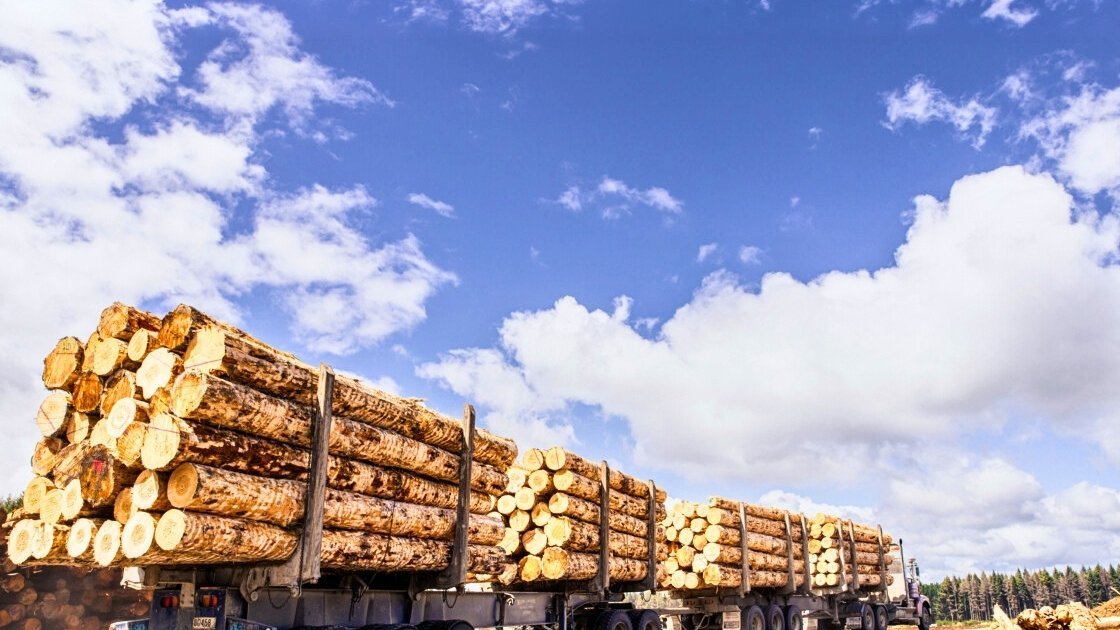
Operating at scale: The off-highway advantage
Inside Kaingaroa, the heavy lifting happens off the public highway. A privately managed off-highway road network runs around the clock, moving logs efficiently from harvest sites to processing or rail. “The forest’s scale lets us plan and coordinate properly,” says ...
Read more
12 Oct 2026
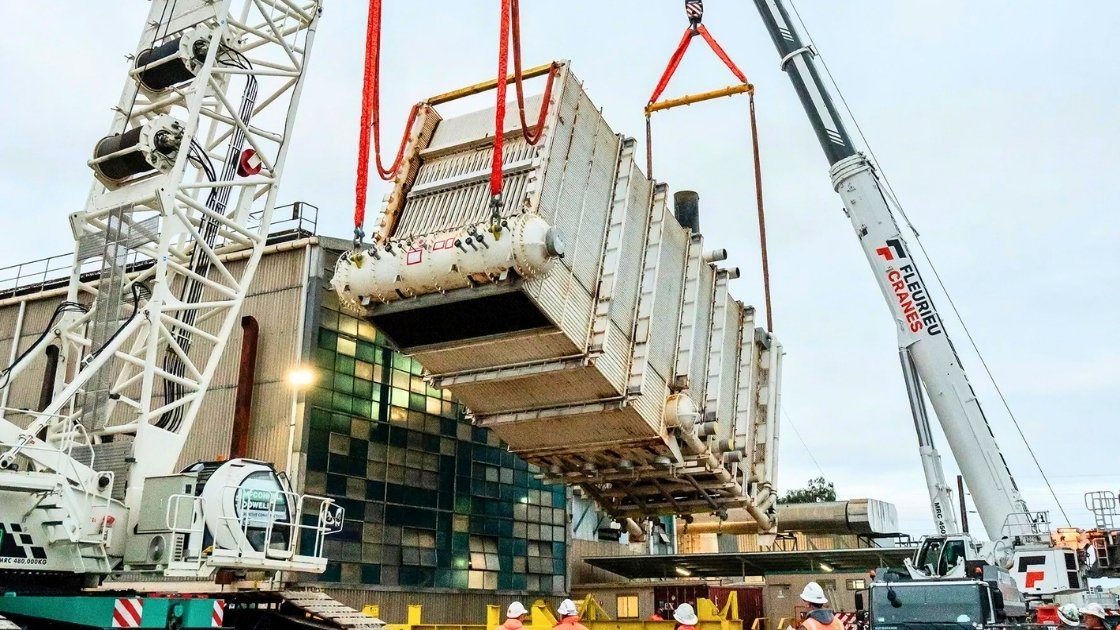
Milestone for Jubilee Sawmill’s $88m bioenergy project
Construction of OneFortyOne’s $88 million Co-Generation Boiler project facility has reached another significant milestone, with the project’s boiler now in place at the Jubilee Sawmill. With crews on site before sunrise on 16 September, months of planning culminated in the ...
Read more
12 Oct 2026
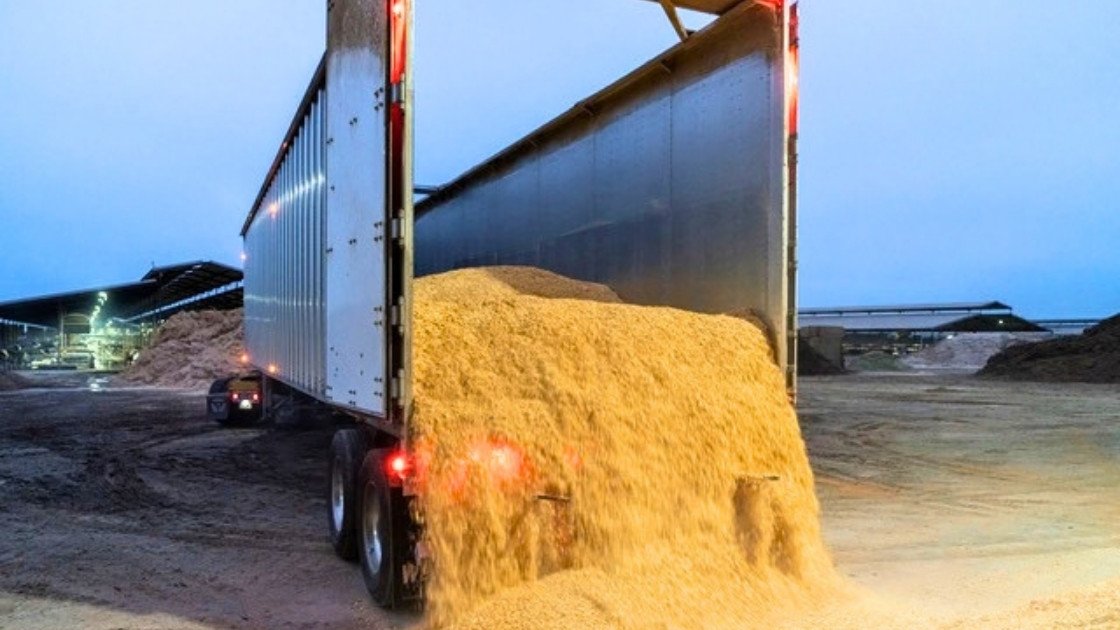
KEITH showcases faster unloading with new RX2 drive
At last month’s Residues2Revenues 2026 conference in Brisbane, material handling specialist KEITH Manufacturing Co. showcased its updated two-cylinder RX2 WALKING FLOOR® drive unit, designed to improve unloading and turnaround times for the wood-products sector. With truck turnaround times directly affecting ...
Read more

12 Oct 2026
Lignin resin delivers flame retardancy without formaldehyde
Researchers have developed a bio-based, formaldehyde-free phenolic resin derived from lignin that provides fire protection, strong adhesion, and zero toxic off-gassing for timber products. Published in the journal Green Chemistry, the study details how the new material, dubbed SALG-PR, functions ...
Read more
12 Oct 2026
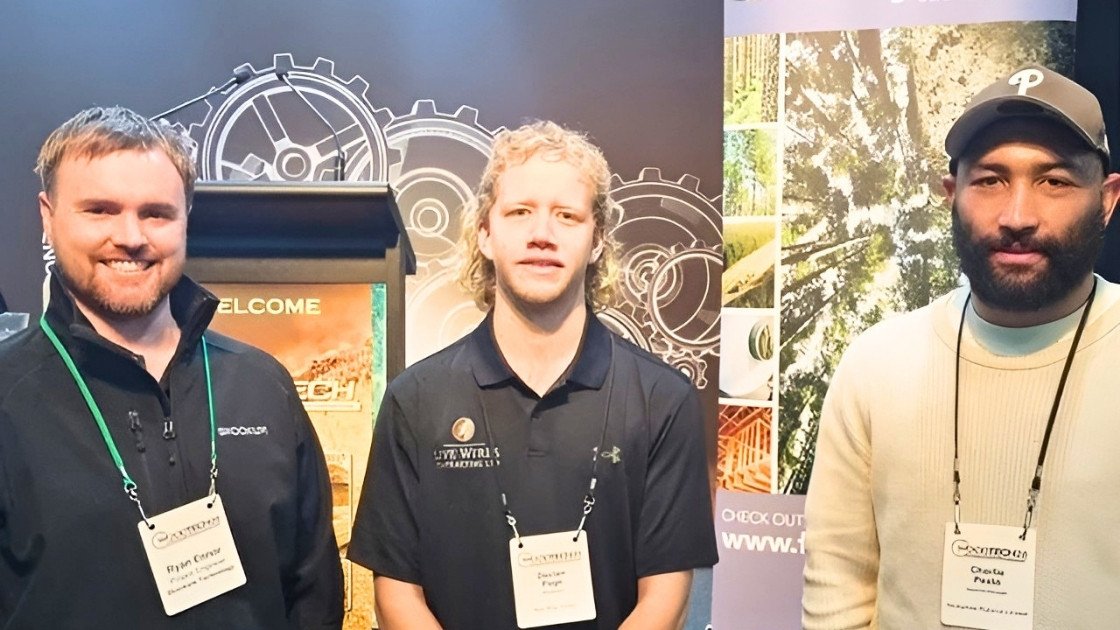
Future-focused learning
In 2026, the WIDE Trust supported four young professionals to attend the WoodTECH 2026 Conference in Rotorua, giving them the opportunity to engage with one of New Zealand’s leading events for wood processing and manufacturing innovation. WoodTECH brings together engineers, ...
Read more

12 Oct 2026
Comact launches Comact Cutting Solution
Comact, a global leader in high-performance OEM wood processing technologies, announced this week the launch of Comact Cutting Solutions, bringing together Smith Sawmill Service, Oleson Saw Technology, Checkmate Precision Cutting Tools, and the proprietary BLADE brand under a common organizational ...
Read more

12 Oct 2026
Untapped wood from forestry to help fuel NZ industry
The country’s supply of sustainable wood fuel is ramping up with work underway to capture previously unused forestry material and investigate new wood energy manufacturing plants. “When businesses are looking at energy options, woody biomass could provide an economic alternative ...
Read more

07 Sep 2026
Biomass trial produces industrial heat at less than $3/GJ
A biomass trial at JBS Riverina’s Yanco facility in New South Wales has produced thermal energy at a supply cost of less than $3 per gigajoule (GJ), highlighting the potential for biomass to provide a lower-cost alternative to conventional industrial ...
Read more

07 Sep 2026
Beyond Woodchips: Australia’s hardwood plantation industry must innovate
For more than three decades, Australia’s hardwood plantation industry has been built on a simple but largely successful business model: growing world-class plantation fibre for export to Asia’s pulp mills. It has underpinned regional economies, attracted significant investment and established ...
Read more

07 Sep 2026
UBC-developed ‘wood foam’ enters production
Inside a new facility at Main Street and Terminal Avenue, wood fibre is moving through a production line and emerging, transformed, as a block of lightweight “wood foam.” For Dr. Feng Jiang, who first developed the material in his laboratory ...
Read more

07 Sep 2026
Free program to help SMEs advance AI and digital tech ideas in Queensland
The free eight-week online program, delivered by Australia’s national science agency, CSIRO, helps businesses turn early-stage ideas into actionable R&D plans while building connections with expert facilitators and researchers. Offered through the Queensland Government-funded Regional University Industry Collaboration (RUIC) program, ...
Read more

07 Sep 2026
Canada and Australia are asking similar questions – but arriving at different answers
New Canadian research echoes themes explored by Australia’s System 600 while highlighting different approaches to industrialised housing. When Perkins&Will recently released its research into a modular mass timber housing system for Canada, the immediate takeaway was straightforward: another country is ...
Read more

07 Sep 2026
Enforcement data reveals where forestry needs to lift its game
Strengthening organisational capability, planning, supervision and risk management remains one of the forestry sector’s biggest challenges, according to new enforcement data released by WorkSafe New Zealand. During the 2025/26 business year, WorkSafe conducted 526 assessments across the forestry industry. One ...
Read more

11 Aug 2026
Testing New Zealand’s first heavy electric loader
A Volvo L120 Electric wheel loader is helping PermaPine test what sustainable equipment can really deliver in one of New Zealand’s most demanding timber processing environments. Set on a 100-acre site outside Taupō, PermaPine is New Zealand’s largest manufacturer of ...
Read more

11 Aug 2026
Turning forestry waste into Australian-made jet fuel
The federal government has announced a $32 million investment to help support a plan to convert forestry waste into Australian-made jet fuel. The funding, made through the Australian Renewable Energy Agency (ARENA), will be provided to Melbourne based company HAMR ...
Read more

11 Aug 2026
Project update: Connecting forests, mills and buildings
ARC Advance Timber Hub Project “An Open-Data Framework for Forest-to-Building Value Chain Mapping” is addressing a major challenge for Australia’s forest and wood products sector: how to better understand, visualise and coordinate data across the entire value chain – from forest resource ...
Read more

11 Aug 2026
Red Stag’s first-of-a-kind CLT modular production line
The Prime Minister, Christopher Luxon, opened the Southern Hemisphere’s first off-site production line to use Cross Laminated Timber, CLT, as the structure. The initiative is a collaboration between local industry leader Red Stag, German architecture firm NKBAK and Austria constructor ...
Read more